Thomas
American WomanThomas is an eighteen-year-old grocery-store bag boy whom Jenny first encounters during a period of acute loneliness and distress. His careful, awkward cigarette break, his comb, and his guarded account of his family give him a vivid presence in a small number of scenes. Though he is not drawn into the revolutionary group’s robbery plan, his store becomes its target, and Jenny later recalls him as a point of comparison while considering racialized expectations and her own treatment in prison.
Identity and First Encounter
Jenny watches Thomas step outside the store and light a cigarette in front of its broad glass windows and sale placards. He cups his hands around the flame while holding his Afro away from it, then moves out of the windows’ line of sight and leans against a cinder-block wall. He takes only quick drags. Jenny can tell that he is not a smoker; the deliberateness of his awkwardness makes the break look practiced, as if he is trying on the solitude of an adult. She is moved by the sight of him savoring his aloneness, a sharp contrast to her own desperation after speaking with Dana. Rather than return to the farm, she has come to the store and watched him from her car.
Thomas recognizes her and greets her cheerfully by the nickname Not-from-Nam, teasing her about the groceries she has bought. When Jenny remarks that he seemed worried about being caught smoking, he says that the store’s boss thinks he is too young, then clarifies that he is eighteen. The exchange makes age and appearance part of his self-presentation: he is legally an adult, even if the people around him do not always treat him as one. He takes out a comb and works on his hair. When Jenny says she is only driving around, Thomas readily offers to go with her.
Friendship, Secrecy, and His Brother
In a later conversation, Thomas realizes that he does not know Jenny’s name and gives his own. He then admits that he had been teasing her about his brother being dead. His brother is not dead: he was drafted, did not report, ran away, and never returned. Thomas says that it is therefore as if his brother were dead, adding that perhaps he is. The account turns an apparent joke into a disclosure of an unresolved family absence.
Thomas’s manner in telling it remains guarded. He glances toward the other people at the bar, lowers his voice, and worries that someone will tell his mother what he has said. When Jenny tells him that he should not be ashamed of his brother’s actions, Thomas replies that it makes no difference to him and that his brother can do what he wants. The exchange does not settle what Thomas feels about the desertion; instead, it shows him protecting his own position with a blunt claim of indifference while acknowledging how closely the matter is watched within his family.
A Reunion and a New Guard
When Jenny sees Thomas again, she is in the Bug with Juan. She recognizes him and tries to speed up, but he has already noticed the car. She stops when he approaches and greets her. Thomas does not reach for his comb this time, and Jenny sees a subtle hardening in his face, a defensive shell she had not noticed before. She has not returned to see him since their earlier meeting. His casual greeting preserves their recognition, but Jenny’s reaction makes clear that their brief acquaintance now carries an uneasiness she cannot easily signal to him.
Juan draws Thomas into conversation and offers him a ride. In the car, Juan asks where he lives; Thomas answers by referring to the place where Juan first found him. Juan also asks what he plans to do later. The exchange places Thomas among people whose movements and intentions are not his own to direct: Jenny is anxious about the encounter, while Juan is congenial and curious. Thomas nevertheless remains at ease enough to laugh with Juan. After Juan and Thomas walk together over the grass toward a shadowed porch, Juan returns flushed and excited, praising the boy’s intelligence. Jenny objects to Juan’s surprise, pointing out the racial assumption implicit in being astonished that a Black boy is smart. The scene makes Thomas’s intelligence visible while exposing the expectation against which it is being measured.
The Store as a Target, Not an Ally
The revolutionary group later plans to rob the bank deposit made by the boss of Thomas’s store. Juan explains that the boss makes the deposit alone at the bank on Main Street, and that the group has checked him out. He insists that Thomas will not take part and will have no idea what is planned; the intended target is the boss and the cash, not the bag boy. Jenny reacts with immediate alarm when Juan tells her the plan. Thomas’s earlier connection to the store therefore becomes consequential without making him a participant: the group uses knowledge of his workplace to identify an opportunity, while explicitly intending to keep him untouched and uninformed.
That distinction matters to Jenny. Thomas is not presented as a comrade, a source of operational help, or a willing accomplice. He is a young worker encountered in ordinary life, and the group’s decision to exclude him marks a boundary between the people carrying out the robbery and the bystanders whose routines make it possible. The plan nonetheless brings political violence into the setting where Thomas earns his living, linking his otherwise modest role to the group’s escalating actions.
Thomas in Jenny’s Later Reflections
Years of underground life and the group’s violence change Jenny’s understanding of political action. She becomes wary of seeing revolution simply as force capable of toppling a system, and increasingly considers the possibility of changing individual minds. Her later work with Pauline and other women to learn about firearms gives her pleasure in learning without pretending to know already. Against that development, Thomas reappears not as a participant in the lessons but as a remembered person whose openness and presumed honesty stand apart from the political world Jenny has inhabited.
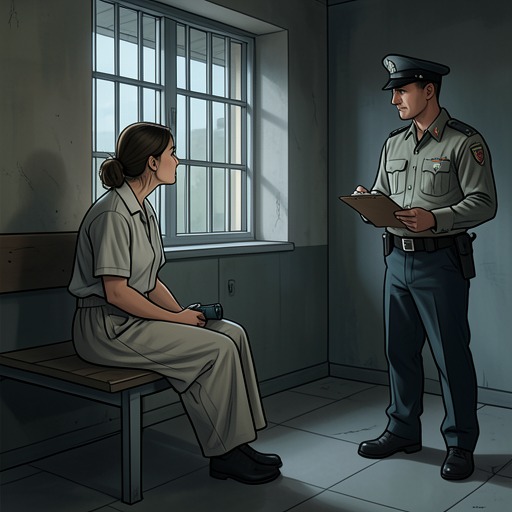
That memory acquires particular force when Jenny considers the unequal meanings of prison punishment and praise. She receives the minimum sentence for her role in the selective-service recruitment-center bombings and is moved to work release after a year for good behavior. Rather than experiencing this as uncomplicated leniency, she feels newly ashamed of being grateful for favorable treatment. Kitchen tasks and repeated praise for being good make her feel like a token, an instance of the model minority granted privileges as an example to others. In that state, she thinks of Thomas as honest, loyal, and open, and imagines that he may be rewarded for being better than expected, for not fitting a stereotype of Blackness. This is Jenny’s projection about how the world might treat him, not a later report of Thomas’s fate. His remembered presence helps her recognize how conditional approval can be: an individual may be praised not simply for who he is, but for exceeding a racial expectation.
Thomas’s narrative importance rests on these contrasts. He seeks a small measure of adult independence in the cigarette break, protects a painful family subject with humor and indifference, and meets Juan’s attention without becoming part of the group’s enterprise. Later, Jenny’s memory of him connects the ordinary promise of his character to the judgments she experiences in prison. The boy she once watched from a car becomes, in her reflections, a way to understand how racial categories shape who is presumed capable, who is rewarded for seeming exceptional, and what such rewards cost.